AimSync Training Guide · Spray Calibration & Recoil Drills
Mastering Recoil Control: Training Drills & Setup Manual (2026)
Quick Answer & Training Summary
Recoil control in PUBG Mobile and BGMI is achieved by combining Always-On Gyroscope (300-350%) with forward wrist tilting and thumb pull-down. To flatten your M416 spray, use a Compensator + Vertical Foregrip (reduces vertical kick by ~25%) and practice 30m wall sprays daily in 5% sensitivity adjustment increments.
1. Understanding Recoil Mechanics: Vertical vs Horizontal Climb
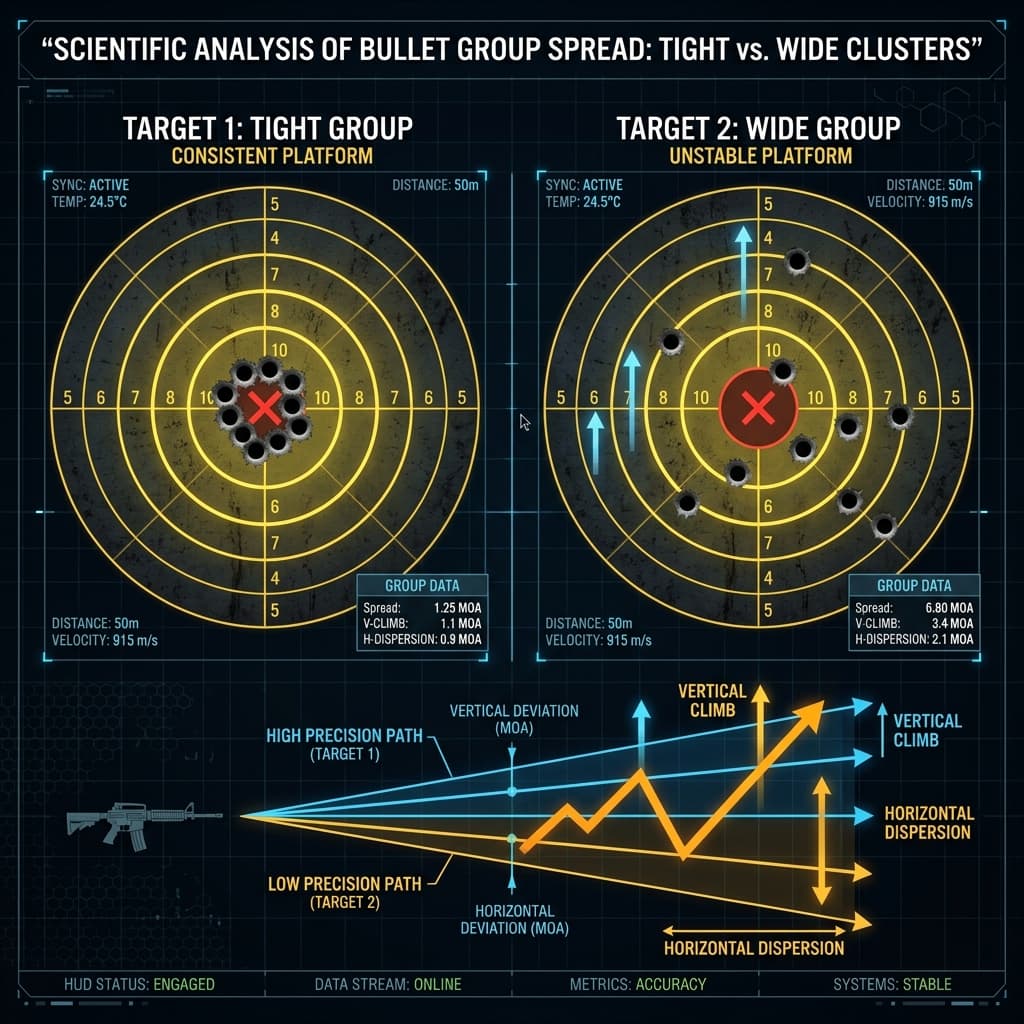
When holding down the fire button on an automatic assault rifle (AR) or SMG, the in-game camera experiences two distinct recoil vectors:
A. Vertical Recoil (Predictable)
The constant upward climb caused by successive bullet shots. Because it rises in a near-linear direction, vertical recoil can be 100% neutralized through consistent downward thumb drag or gyroscope forward wrist tilt.
B. Horizontal Recoil (Random)
The unpredictable side-to-side jitter during automatic sprays. Horizontal recoil cannot be fully predicted by muscle memory and must be dampened using attachments (Compensators, Half Grips) and real-time micro-gyroscope tracking.
2. Weapon Attachment Recoil Reduction Tier List
Combining optimal sensitivity with top-tier attachments drastically reduces the physical tilt angle needed for zero recoil:
| Attachment Category | Top Choice | Vertical Reduction | Horizontal Reduction |
|---|---|---|---|
| Muzzle (AR) | Compensator | -15% | -10% |
| Foregrip (Long Range Spray) | Vertical Foregrip | -15% | 0% |
| Foregrip (Close/Mid Hybrid) | Half Grip | -8% | -8% |
| Foregrip (Hipfire CQC) | Laser Sight | 0% | -30% Hipfire Spread |
3. The 4 Essential Training Ground Recoil Drills
30-Meter Naked Wall Spray Calibration
Equip an M416 with NO muzzle or grip attachments. Stand 30m from a flat wall. Fire a full 30-round mag while pulling down. Adjust your Gyro / ADS sensitivity in 5% increments until the bullet cluster forms a tight vertical line.
Target Transfer Rapid Sweeps
Set 3 targets at 20m, 40m, and 60m. Fire 10 rounds into target 1, then sweep your wrist to target 2 without releasing the fire button, firing 10 rounds, then finish on target 3. Builds recoil compensation during lateral movement.
Crouch-Peek Recoil Suppression
Stand behind cover, peek left/right, drop into a crouch (which inherently reduces recoil by ~20%), and fire a 15-bullet laser burst before resetting. Essential for high-tier rank lobbies.
7.62mm Heavy Recoil Adjustment (AKM / Beryl)
Switch to a Beryl M762 with 3x scope. Because 7.62mm rounds have 20% higher vertical climb than 5.56mm rounds, increase your 3x Gyro ADS by +10% over your M416 baseline.
Calculate Your Custom Zero Recoil Profile
Generate hardware-specific sensitivity parameters optimized for zero recoil sprays on your phone or tablet.
Generate Recoil Profile →